
|
15/12/2025 0 Comments Meet our Former Trainee: Harry Dearsly Teacher of Music at Exmouth Community College “When I was thinking about teacher training, I was thinking about students seeing teachers in front of them who are from a different background. If they see someone who is their background, they might think that is something that they can do as well and this motivates me to connect with the students more.” As a professional musician, Harry Dearsly came into teacher training with life experience aplenty. Music has always played a big part in his life and continues to do so. After college he trained with the Royal Marines band for two years, which although good experience, did not suit him musically and he then went onto study music in a Degree Course at Bristol Institute of Modern Music (BIMM). The idea to teach was starting to germinate and Harry worked as a Teaching Assistant at Exmouth Community College for three years after graduating. He then found a job as a subcontracted primary music teacher and seized the opportunity to teach, as he did not need a teaching qualification and taught all the year groups from Early Years to Year 6 for five schools in the area. However, it was a lot of travelling and being self-employed it was difficult to maintain when the work started to dry up, and when COVID hit, the work stopped completely, and the business eventually closed down. During the COVID years, Harry worked as a delivery driver, before working as a cook in a friend's café because he needed another job whilst he maintained his band and music. Two years in, Harry remembered making food in the café and saying to himself: “I’ve got my degree. All I need is my PGCE and then I can teach, and that is what I’d really love to do: I want to inspire youngsters with music,” imagining himself coming back to Exmouth Community College and working there again. It was like a manifestation. Harry remembered replying to SWIFT Executive Director Martin Smith in his interview about why he wanted to go into teaching: one of his time main reasons was to represent minorities in the South West in teaching and that he would like a teaching placement at Exmouth to give back to his community. Harry was then accepted onto the training course near to his home with SWIFT Teacher Training and of course, the rest is history. Harry has always been in a band and performed and played at festivals and shows - including Glastonbury and also supported big acts, such as The Specials and Lee Scratch Perry and whilst studying at BIMM Harry sat next to popular musician, George Ezra. His band’s music has been released on all digital platforms and had air play on BBC Radio 1 David Rodigan show. But as all practising musicians will know, he needed a steady income which has always steered him to working at the same time. Harry’s current band is a duo called Harry & Lee, playing all sorts of original music, and through the different eras and they perform at weddings and functions and in pub gigs. Music is in the Dearsly DNA and Harry’s daughter is already inspired by music and plays the piano and bass guitar and loves singing and is in a choir. She goes to the same primary school that Harry attended, where they have very good music facilities and encourages her love of music and Harry sees the benefits of music learning for her that he sees in his own students. Above all, Harry’s real drive as a Teacher of Music is to inspire the next generation to pick up an instrument and to reap the positive rewards of music. Harry has an interesting heritage in that he was adopted at one month from Sri Lanka and his parents here in the UK are White British gifting him a White British family, with a Sri Lankan heritage. Harry has been back to Sri Lanka on a family-finding journey, although sadly that did not work out. Whilst his upbringing is British from his adoptive parents, he obviously has dark skin and lives in a predominantly white area. But for Harry, it is about trying to spin the positives and see it as a representation of a minority group, and there are many Asian, Brown and Black people in the community of Exmouth, which he tries to build on. At school, as a case in point, only the other day, a student who is from India and new to the school stood outside Harry’s classroom early in the school day. Harry could tell that he was potentially from India or Bangladesh. The student came into his classroom and Harry asked if he were new and the student replied that he was from India, to which Harry shared that he was born in Sri Lanka and in that moment, he sensed a relief in the student as felt a connection. Thinking about Harry representing a minority group, we were grateful to interview him to find out more about his experiences as a Teacher of Music. 1. What guided your decision to train with SWIFT Teacher Training?
Firstly, I was trying to find courses that were available for secondary music, PGCE, and a SCITT course. With SWIFT having different campuses, it allowed me to find a placement at a school that was near to where I lived, and having a family as well, I wanted to train close to home and be able to find a way to do that through a course that was hands-on like the SWIFT course. Also having the added extra of the partnership with the University of Nottingham and being able to do the PGCE element was my main focus. 2. Were your individual needs met during the course e.g. learning, SEND, health, representing a global minority group? I do not have any SEND myself, but for those colleagues with SEND, I saw that they were represented very well and always well supported. Personally, for me, it was being a minority background. Being able to share our views and opinions, along with others who were also from minority backgrounds, I felt like we all had an equal say and sharing our different backgrounds made the experience more interesting because you had more diverse people's opinions, which is beneficial. 3. Did you consider the training environment to be inclusive and respectful of colleagues from all backgrounds? I would say the training environment was very respectful and inclusive and everyone's background was valued. As I said in the previous question, we all got to share our own opinions and ideas and everyone was able to give their different views and encouraged to share our own personal life experiences. Some people had backgrounds in school already, and there were young people at the start of their career and people that were older. I was also a career changer as well, and there was always a sense of collaboration and that everyone’s voice in perspective was equally heard. 4. What strategies helped you to navigate any challenges related to representation or inclusion during the course? I definitely relied a lot on peer support and mentor support, my school and placement Mentor and my SWIFT Tutor as well and both within my Campus and placement schools. I benefited from support from people, and I made a point to speak openly about representation where it was appropriate and obviously through the training there were parts of the course that linked to diversity and inclusion. I could normalise my conversations and reflection was a big part of the course and played a big role because I used the challenges and opportunities, and learning to grow from my experiences. Also thinking that my place in the programme in itself was a step towards greater representation for other minority backgrounds. 5. How has your cultural background influenced your approach to teaching and connecting with students? This was probably the biggest for me because it is the strong appreciation for diversity from my own cultural background and having that represented. In my current school where I am working, I was a student here and was one of maybe 10 minorities in a large school of maybe a few thousand at the time and an all-white teaching staff. In nearly every lesson I have today, there is a minority group who are represented by teachers like me and the teaching staff now have more of a representation in the community. It gives me a sense of pride and future hope that encourages me. When I was thinking about teacher training, I was thinking about students seeing teachers in front of them who are from a different background. If they see someone who is their background, they might think that is something that they can do as well and this motivates me to connect with the students more. Interview by Jude Baylis, SWIFT Executive Assistant
0 Comments
11/12/2025 0 Comments Change to Course Fees In line with the recent announcement from the Department for Education, we will be increasing the annual cost of our courses from £9,535 to £9,790 for full-time study and this will apply to your course beginning in the 2026/2027 academic year. We, along with many other SCITTs, universities and higher education providers, will be making these increases in light of the recent government announcements that the maximum tuition fees that can be charged have been increased in line with inflation. We understand that student tuition fee loans will also be increased to reflect these changes. These small increases to the current tuition fees will help SWIFT Teacher Training manage the increased costs of providing education in the current difficult economic climate and preserve service delivery and quality. If you have any questions about this please do not hesitate to contact our Executive Director, Martin Smith ([email protected]). Teacher of Modern Foreign Languages at Teign School “Regular feedback and knowing that I will have a moment where my Mentor and I are going to sit down, with a cup of tea and reflect and have that time together scheduled into my week, has been the most valuable part for me as an Early Career Teacher.” Sometimes life turns full circle. Harriet Sleath is in her first year of teaching French and Spanish at Teign School (part of Education South West); which happily happens to be her own former secondary school. This Devon girl got the bug for Languages when she was at school and studied Spanish at GCSE and A Level and French to GCSE, before going overseas to put her language learning into working practice teaching English as a Foreign Language (TEFL) in Spain for a year, and then further afield to Mexico for eight years. As well as teaching Languages, Harriet was recruited by her former Teacher of Music at Teign to teach Music to Key Stage 3 as she plays the piano. This is providing further additional joy in Harriet’s timetable with some cross-curricular Languages music-making. Remember, the traditional French nursery rhyme, "Frère Jacques…"? Harriet trained last year with us and ESW is a partner of SWIFT Teacher Training, as Kingsbridge Teaching School Hub (based at the Community College) is one half of SWIFT. 1. What did you most enjoy on your teacher training course? There are two things in particular that I enjoyed on the teacher training course with SWIFT. Firstly, I enjoyed seeing the progression of students that I got to meet over the course of my two different placements. I felt very grateful to be in two different schools and for the time to get to know the students and especially seeing them make that progress with me. I think I had thought as a trainee teacher I might be a bit like a fly on the wall and not get to know the students very well. But having that opportunity to teach them something and witness that light bulb moment when they fully understand, or even when they ask me an insightful question were some of the most enjoyable moments, because they offered me an opportunity to explore what the students themselves would like to learn. I think, discovering what was interesting for them definitely shaped me as a teacher. The second thing was being given the space to find my own personality as a teacher. I feel very lucky as both my Mentors were fantastic and allowed me to take the time to realise what I want to be as a teacher, what I want my teaching to look like, and what I want to bring to my classroom environment. For me, this was very important. 2. What was the greatest learning curve and how did you overcome it? My greatest learning curve was adaptive teaching in learning how to manage and meet the needs of a wide range of learners in one class. During my training year, a lot of the focus was on adapting to SEND students, and those with significant barriers to learning, and quite rightly so. I am still finding that balance in adapting to students’ needs, whilst also continuing to inspire and interest other students who have less barriers to learning, or who are simply more passionate about the subject. Finding that balance was one of the biggest learning curves; but being able to again work with my Mentors and have that time to learn and try out different things in the classroom was important to help me overcome that barrier as part of my learning curve. 3. What have you found to be particularly rewarding in your first term?
Firstly, it has been rewarding to build relationships and trust with students. I anticipated it would be difficult coming in as a brand-new teacher and in an environment where students know that I was a trainee teacher. However, I wanted the students to be able to get to know me; hence, it was particularly rewarding in the first term that students who already felt comfortable in coming to talk to me, and who trusted me as their Teacher of Spanish and asked me questions about the Spanish culture. Secondly it has been rewarding to take part in some of the school’s extracurricular activities and feeling part of a collaborative student and staff community. Seeing the students outside of my classroom doing something that they enjoy, and showing them my other passions, pushing myself out of my comfort zone has been some of the most rewarding moments of the first term. 4. How is the Early Career Teacher Programme helping you in your first year of induction? It is helping me a lot! My school Mentor is fantastic, and their guidance has been invaluable. Being able to refine some elements like my routines: for example, countdowns and waiting to have everybody's attention, has been very helpful. Regular feedback and knowing that I will have a moment where my Mentor and I are going to sit down, with a cup of tea and reflect and have that time together scheduled into my week, has been the most valuable part for me as an Early Career Teacher. 5. What are your hopes for the teaching of Languages in our schools now and in the future? This is a big question, and I could talk about this for a LONG time! Certainly, I hope to see language learning viewed not only as an academic subject in learning French and Spanish; but as a key to understanding other cultures and how we all connect on a global scale. I hope that students continue to be open minded, so that they come into the class knowing they are going to learn some Spanish and French. But that's not all. I hope that we can continue to guide young people to move past the whole “everybody speaks English” mentality - because that is still an issue. By making lessons engaging, relevant and inclusive, I want to inspire students, particularly in Devon and in the South West to know that Languages will open doors for them throughout their lives. Not only as they try to figure out what they want to do when they are 18 and to show them how it can contribute to their careers in the future. Some of my most successful moments in lessons are when students might ask a question, like where is Barcelona? Or do they speak Spanish in Barcelona? But I like these inquisitive questions, and I like that students want to find out more and I am taking the time to answer these questions. All the students in the classroom are listening because they are genuinely interested. It might be obvious to me where and why people speak Spanish, but even more intriguing is where and why French is spoken. I have been redoing the display boards with my tutor group and am planning to get a big map of the world to show where people speak French and Spanish, because a lot of the time we simply do not know and I would like that information to be more readily available to my students. So, my hopes for the future of teaching Languages are that it is much more than teaching Spanish in the classroom, it is about teaching the students about where we speak languages, and why we speak different languages, which I am very much looking forward to bringing into the curriculum more and more. Interview by Jude Baylis, SWIFT Executive Assistant We understand the decision to become a teacher is often deeply personal, and shaped by formative life experiences, influential Mentors, and the desire to make a meaningful impact in the profession. Towards the end of last year, we asked four of our Class of 2025 trainees, Amy, Beth, Natalie and Nina about their journey into teaching. Encouragingly, it was clear their experiences were driven by a blend of passion, personal growth, and a commitment to nurturing young minds. Their stories were unique but shared common threads that highlight the transformative power of education and the supportive role SWIFT Teacher Training played in their development. You can enjoy reading some of the highlights here: What were your top reasons for wanting to train as a teacher and what led you to your journey with SWIFT Teacher Training? “When I went to the different interviews, SWIFT was the one that stood out for me, because they were the only ones that emailed me afterwards to check in with me. I could genuinely see how much they care about providing for their students and I knew that was the best one for me.” (AMY) 1. Inspiration from Personal Experiences and Role Models Nina's own Teacher of Geography sparked her love for the subject and his enthusiasm and deep knowledge inspired Nina to pursue Geography at university, and ultimately led her to teaching, with the goal of passing on that same passion to her own students. Closer to home, Nina also benefited from the positive influence of her Mum, who is a primary teacher and Geography Lead. Similarly, Beth’s journey began with her Teacher of P.E. and Form Tutor who helped her come out of her shell in Year 7. Their encouragement and personal attention helped Beth to feel seen and valued, motivating her to become the teacher who could help others find confidence and belonging. Beth would like to be the person who can “bring someone out of their shadow” and to help them thrive. Amy was also surrounded by positive educator role models with family members as teachers and Teaching Assistants, and her boyfriend’s sister recently completed a PGCE — providing her with an insight into the profession, including the challenges! Amy’s natural affinity for working with children, especially as the eldest in her family, made her appreciate the joy of helping young learners experience those “Eureka” moments. Natalie’s motivation stemmed from seven years working in a Special Needs school where she saw first-hand children arriving with low confidence and low resilience rebuild their self-worth through consistent support. Natalie’s desire to be a “safe adult” who never gives up on a child is the cornerstone of her teaching philosophy. 2. A Desire to Make a Positive Impact on Young Lives Nina emphasised the importance of Geography in helping students understand real-world issues, including climate change and sustainability and sees teaching as a way to equip future generations with the knowledge and awareness needed to protect the planet. Beth’s motivation was rooted in her own transformation through school sports and activities, which she wanted to replicate for others to help discover their strengths and passions. Beth’s goal was to be a guiding force for those who might otherwise go unnoticed. Amy found joy in working with children and the opportunity to help them understand and grasp new concepts, and feel proud of their progress. Natalie’s experience in Special Education taught her the importance of emotional connection and advocacy. From her placements in mainstream settings, she understood how children with neurodiverse needs can sometimes go unrecognised. Her mission as a teacher was to ensure every child felt valued and supported, regardless of their background or challenges. 3. A Strong Alignment with SWIFT Teacher Training’s Values and Support The trainees’ decision to train with SWIFT Teacher Training was guided by the programme’s empathy, supportive environment, flexibility, and genuine care. Amy was impressed by SWIFT’s personal touch during the interview process. Unlike other Providers, SWIFT followed up with her after the interview, expressing interest in her experience and made her feel truly welcomed, which continued throughout her training. Beth appreciated the reassurance during her interview, especially initially feeling nervous. The interviewers took the time to calm her fears and explain the process, which gave her confidence in the programme’s supportive culture. Beth also valued the practical benefits of training locally, making her journey more manageable. Nina was also glad to train locally as this enabled a placement at her former secondary school where she enjoyed the rewarding and insightful transition from student to colleague. Natalie was drawn to SWIFT’s understanding of the diverse needs of trainees. As a parent with two children in different schools, Natalie needed a programme that considered logistical challenges like childcare and travel. SWIFT’s approach felt tailored to her situation, helping her to feel seen and supported. She also appreciated the non-university setting, and the more accessible and welcoming training environment. What have you found to be the most rewarding part of the course? “Seeing everyone else on the course progressing as well and discussing and chatting together about how they are doing, and seeing everyone succeeding in one way or another. Always finding the positives to take from every aspect of the course.” (BETH) 1. Building Strong Relationships with Students and Staff Nina emphasised how the school-centred nature allowed her to spend extended time with students, enabling deeper connections and observing their progress over the year. It was especially rewarding to feel like a true member of the school team and she appreciated becoming friends with colleagues and integrating into the staff community. Natalie felt initially unsure whether she could form meaningful relationships with the larger number of children in a mainstream classroom. However, she found she could connect deeply with all the children in her class, giving her a sense of contentment and reassurance. Natalie valued her relationships with Mentors and other staff, noting their feedback came from a place of genuine care and support, and made her feel encouraged and empowered. 2. Seeing Student Progress and Making an Impact Amy valued the opportunity to work closely with children and to watch the tangible improvements in their learning. For example, her pupils’ handwriting and the pride they felt when praised for their progress. Amy also enjoyed running her own after-school clubs, which gave her a sense of responsibility, allowing her to explore creative activities like crafting and nature-based projects, helping her to grow in confidence and feel more connected to the children and their development. Beth focused on the observed progression — not only in her students, but in herself and her peers. Recalling her initial doubts about teaching full lessons early in the course, Beth noted how support and encouragement boosted her, and it was rewarding to see her own growth documented through observation forms and Mentor feedback and the collaborative spirit sharing successes and challenges with other trainees. 3. Supportive Learning Environment and Professional Growth Natalie found the Mentor support to be constructive and caring and Amy valued the openness of the programme, in encouraging them to observe different teaching styles and the freedom to explore her interests. Beth was grateful for the positive reinforcement and clear documentation of her progress, which helped to stay motivated and confident. What has been your biggest challenge and how have you overcome it? “I think the support of the Campus Team made me feel like I could do it, even when I was finding it hard, because you have those people behind you saying, come on, you have got this…and refocus where you are and you can do it.” (NATALIE) 1. Developing Classroom Presence and Confidence Amy’s primary challenge was building her classroom presence and overcoming hesitation, particularly in managing behaviour and asserting authority. Entering the classroom with limited prior experience, Amy confessed to struggling initially in being soft-spoken and unsure of when or how to intervene in behavioural situations. Amy’s initial lack of confidence was exacerbated by the thought of being observed, which made her feel self-conscious and hesitant. However, Amy tackled this challenge by focusing on developing consistent routines and becoming more assertive and consciously established clear expectations and boundaries. Over time, this helped Amy to gain confidence and become more effective in managing her classroom and insistence on routines. 2. Managing Workload and Time Effectively Beth identified time management and balancing the demands of the PGCE and QTS components as her biggest challenge in navigating university assignments, school assessments, and daily lesson planning, whilst maintaining her other personal commitments. Beth developed a meticulous organisational system and used a diary and checklists to plan her time, often preparing lesson plans during half-term breaks to stay ahead. Beth’s proactive approach to effective management of her workload gave her a sense of accomplishment as she ticked off completed tasks. Beth’s experience underscored the importance of time management, self-care, and seeking support during busy periods. 3. Navigating Relationships and Maintaining Work-Life Balance Natalie faced the challenge of navigating relationships and maintaining a healthy work-life balance. However, Natalie found support on the SWIFT programme, particularly from her Mentor who offered empathy, encouragement, and practical advice and helped Natalie to be confident and believe in her capabilities as a trainee teacher. Natalie recognised the challenge of maintaining a work-life balance in a profession known for its demanding nature and was proactive in setting firm boundaries. For example, completing her work during school hours and preserving her evenings for personal time, helping to prioritise her mental well-being. 4. Prioritising Well-being and Sustainability in Teaching Nina showed a deep awareness of the emotional and physical demands of teaching and understood the importance of maintaining personal well-being and setting boundaries to ensure sustainability in the profession. Nina recognised that teaching is not only a job, but a vocation, which can easily consume one’s personal life if boundaries are not clearly defined. Nina established a structured work schedule in arriving early and leaving school at a set time to protect her home life. She emphasised the importance of self-care and mental health, and prioritising her well-being to be fully present and effective for the students. Above all, finding a balance. What have you most enjoyed on your school placements? “I enjoyed being part of a team and building strong relationships with my students and getting to know them and their needs really well and on my long placement it enabled me to develop effectively as a teacher.” (NINA) 1. Engagement in School Community and Events Amy found great joy in participating in school-wide community events, including World Book Day, Science Day, and school discos. Dressing up as characters like Mary Poppins and engaging in themed vocabulary activities allowed Amy to connect with students in a fun and memorable way and she felt even more integrated in the school environment and boosted her growing confidence. Beth also appreciated the breadth of school life, particularly enjoying extracurricular activities and school trips, taking part in a variety of events, including sports fixtures and Geography fieldtrips that allowed her to see students in a different light and build a rapport outside the classroom and enriched her understanding of the holistic nature of teaching. Encouraged by her Mentor, Natalie valued the opportunity to bring creativity into her teaching. She designed immersive learning experiences, such as a literacy project where pupils received boarding passes to “travel” to the Great Barrier Reef and her imaginative approach created excitement and engagement, making learning enjoyable and meaningful for her pupils. Nina highlighted the importance of becoming part of the school team and enjoyed forming friendships with colleagues and being involved in the day-to-day life of the school. Nina’s sense of belonging and collaboration made her placement even more enjoyable. 2. Subject Mastery and Confidence Building Amy entered her placement with concerns about teaching core subjects like Maths and English. However, through regular practice and support, she developed a strong affinity for both and now considers them to be her favourite teaching subjects! Beth enjoyed the challenge of adapting to different curricula across her placements and appreciated the opportunity to teach a range of subjects and learn new content, particularly in Physical Education and Geography. This exposure broadened her subject knowledge and boosted her confidence in delivering diverse lessons. Natalie also overcame her long-standing anxiety around Maths by teaching it regularly and discovered that her own struggles helped her to empathise with her pupils and allowed her to approach the subject with greater understanding and patience. This shift not only improved her teaching, but also sparked a newfound passion for subjects that she once found daunting. Nina gained confidence and refined her teaching approach thanks to the extended nature of her placements, always reflecting on her progress, supported by constructive feedback from her Mentors . 3. Creativity and Autonomy in Teaching Amy enjoyed the freedom to explore creative teaching methods, particularly in how she approached community events and classroom routines. Her involvement in planning and executing themed days allowed her to express her creativity whilst enhancing student engagement. Beth embraced the variety of experiences her placements offered, including exposure to different teaching styles and school cultures. This variety encouraged her to think creatively about lesson delivery and classroom management and helped her growth as a more adaptable and resourceful teacher. Natalie thrived from the autonomy to design her own lessons and classroom displays. Her Mentor’s encouragement to “just be creative” empowered her to implement innovative ideas, such as interactive working walls and thematic writing projects, reinforcing her belief in the value of creativity in education. Nina appreciated the opportunity to tailor her teaching to the needs of her students and found joy in developing strong relationships that allowed her to personalise her approach, which in turn, fostered a more creative and responsive classroom environment. 4. Building Relationships with Students and Staff Participating in community events and daily classroom interactions helped Amy build strong relationships with her pupils and these connections boosted her confidence and she valued the mutual respect and enthusiasm that developed over time. Beth emphasised the importance of connecting with both students and staff and found the staff at her placements to be welcoming and supportive and encouraging. Her involvement in extracurricular activities also helped her to bond with her students in less formal situations, strengthening her relationships and classroom dynamics. Natalie highlighted the role of empathy in building relationships with students, particularly when teaching challenging subjects. By acknowledging students’ struggles and working through them together, she fostered a supportive and collaborative learning environment. Her Mentor’s trust and encouragement also played a key role in helping her feel empowered and connected. Nina placed significant emphasis on the relationships built during her placements, developing deep connections with her students by understanding their individual needs and supporting their growth. Her Mentors were important in this process, offering guidance and encouragement that helped her to reflect and improve and central to her enjoyment and development as a teacher. What are you most looking forward to as a teacher? Lots in a nutshell! 1. Building Relationships with Pupils Nina emphasised the importance of forming strong, caring relationships with students as central to motivation and success in learning. Feeling cared for can significantly impact a student’s engagement. Nina looks forward to watching her students grow, achieve, and succeed — not only academically, but personally too as she believes the teacher-student relationship the foundation for development and was excited to see the transformation of young people into confident young adults. Similarly, Beth expressed her excitement about forming meaningful connections with her tutor group and looked forward to seeing them every morning and building a consistent and supportive presence in their lives as someone they could rely on for help, guidance, or simply a listening ear. Beth found joy in the idea of being there for students throughout their journey, helping them to adapt and grow. Natalie was deeply enthusiastic about creating a sense of belonging in the classroom and planned to read Our Class is a Family to her new pupils during the transition morning, setting the tone for a nurturing and inclusive environment. Natalie’s eagerly anticipated every child feeling valued and part of the community as central to her teaching philosophy. Amy was looking forward to meeting the new children in her class! 2. Seeing Student Progress and Growth Beth was particularly excited about witnessing the progression of her students when they joined secondary school and the rewards of observing how each student develops at their own pace, regardless of their academic level. Her focus is on personal growth, and she looked forward to supporting students throughout their own journeys. The long-term development of students is a key motivator and inspiration for Nina who was excited to watch her students evolve and succeed over time, especially as she becomes more established in her school, 3. Having Autonomy and Ownership Amy looks forward to having her own class and the autonomy that comes with it, reflecting on her journey from a trainee to a more confident teacher. She was excited about setting her own routines and adapting teaching methods to suit her style. Whilst she would respect existing systems, Amy was keen to implement ideas seen elsewhere that align with her teaching approach. Natalie was also excited about having her own classroom and was thrilled to be part of the Year 2 Team and to contribute to curriculum planning. Her creativity had been recognised by the school leadership, and Natalie was eager to bring this creativity into her teaching. 4. Transitioning from Training to Teaching Amy reflected on the shift from being a trainee to a full-time teacher and growing in confidence and skill as she learned from her teaching placements. The idea of being “their teacher” carried a sense of responsibility and pride — not in terms of authority, but in being a consistent and trusted figure in the classroom. Amy was excited to embrace this next phase of her professional development. Nina acknowledged the support needed during training and looked forward to becoming more autonomous and is very excited about having her own classes and developing her teaching style independently. 5. Creating a Positive Classroom Environment Natalie was passionate about fostering a welcoming and inclusive classroom and committed to building a classroom culture where every child feels safe and valued. Natalie wanted her pupils to see the classroom as a family, which sets the tone for collaboration, empathy, and mutual respect. Amy was keen to establish routines that reflected her teaching style and from different observed approaches and was excited to implement strategies that work best for her and her students – including academic routines and classroom management techniques that contribute to a positive learning environment. 6. Being Part of a School Community Natalie was looking forward to being part of the Year 2 team and contributing to curriculum planning. She values collaboration and is excited to work alongside colleagues who appreciate her creativity. Being part of a supportive team enhanced her enthusiasm for teaching and a sense of belonging within the school. We end on this shared excitement for the journey ahead as new teachers as hopeful, committed educators ready to make a meaningful impact in the profession.
We wish ALL our trainees every success and we are delighted that they began their teaching journey with SWIFT Teacher Training. With our trainees settling into their long placement schools, we asked them and their mentors to reflect on the successful completion of their short placements. Trainees 'The Department and whole school were supportive. The mentor and I met frequently, other staff were aware of my requirements and gave valuable feedback. Lots of extra-curricular opportunities. Supportive and happy environment.' 'I had a strong relationship with my class and mentor. Felt a valued member of the class, school were supportive and kind.' 'I Improved my confidence through praise, advice and high level of support.' School Mentors 'Strong trainee who worked hard, noted and worked on feedback. They were really well organised and had a lovely, calm demeanour in the classroom, which students responded well to.' 'The instructional coaching strategy was a valuable tool as it allowed us to practise core teaching moments.' 'The mentoring / coaching conversations we had were very constructive and encouraged the trainee to actively consider their mental models and what specific steps made them successful in their task.' 16/12/2024 0 Comments Change to Course Fees In line with the recent announcement from the Department for Education, we will be increasing the annual cost of our courses from £9,250 to £9,535 for full-time study and this will apply to courses beginning in the 2025/2026 academic year. We, along with many other SCITTs, universities and higher education providers, will be making these increases in light of the recent government announcements that the maximum tuition fees that can be charged have been increased by 3.1% in line with inflation. We understand that student tuition fee loans will also be increased to reflect these changes. These small increases to the current tuition fees will help SWIFT Teacher Training manage the increased costs of providing education in the current difficult economic climate and preserve service delivery and quality. If you have any questions about this please do not hesitate to contact our Executive Director, Martin Smith ([email protected]). 22/11/2024 0 Comments Supporting University of Plymouth on a fast track degree route in to Primary Teaching We are delighted to be working with the University of Plymouth to support students studying their new BA (Hons) Primary Education degree to continue on their pathway in to teaching. This exciting new fast track degree allows students to gain a full BA (Hons) degree in just two years. SWIFT Teacher Training are offering a clear pathway for students to continue on to gain their Qualified Teacher Status (QTS) with our 1 year teacher training course. To find out more information please see the flyer HERE or visit the University of Plymouth website. 17/10/2024 0 Comments Applications are open!
14/6/2024 0 Comments Courses closed15/5/2024 0 Comments 2024/25 Course Closure
18/3/2024 0 Comments Spring News Update18/3/2024 0 Comments Autumn News Update8/1/2024 0 Comments Science Trainees - Ogden Trust

Each week will cover a different physics topic, working through the conceptual ideas that students and teachers sometimes struggle with: Forces & Motion; Electricity & Magnetism; Energy; Waves; Earth & Space; Matter & Atomic Physics. The sessions for 2024 will be delivered in June/July – each session will run from 6-7pm.
The course will include:
16/11/2023 0 Comments Applications Open
26/9/2023 0 Comments Meet our Lead Curriculum Designers Primary Curriculum Design Lead Olivia Bartlett I am extremely passionate about the teaching profession and strive to provide the most conducive learning environments for both the children and staff I work with. Working across two settings, both of which are in the highest quantiles for deprivation, I am completely committed to developing all children’s life chances enabling them to achieve their full potential. I am dedicated in ensuring the curriculum delivered by SWIFT Teacher Training is centred around trainees developing this same mindset as they begin their successful teaching careers. Teaching is special because: • Give more young people the educational opportunities and outcomes they deserve no matter their starting points in life. • Provide children with the belief (and tools) that they can achieve anything that they set their minds to. • Introduce and develop children’s love of reading, watching them become life-long readers. 13/9/2023 0 Comments Partnering with Now Teach We are delighted to be working with Now Teach who support people coming into secondary teaching with experience in other industries. Career changers who join their network will have access to bespoke advice, coaching and support to help them thrive in their new profession, through their training year and first year as an early career teacher. Learn more about Now Teach and the support they provide by visiting their website. 6/9/2023 0 Comments Applications open soon! With only a few weeks left until applications open for 2024 PGCE / QTS courses, get in touch if you have any questions about our courses or routes into teaching in general. We have a number of online information events and school experience days lined up for you to attend across our 5 campus areas. Come and train, live, teach somewhere special! Contact us: Nicky Sheppard | [email protected] | 01548 852641 x2575 Abby Spearing | [email protected] | 01548 852641 x2592 For information on applying | HERE To apply | HERE By way of introduction the PGCE element of our SWIFT Teacher Training courses, you might be interested in the following pen portrait of the University of Nottingham.




An outstanding Ofsted-rated Initial Teacher Training provider (March 2022), the University of Nottingham build on the successful School of Education’s research that is proud to be amongst the most significant and influential, internationally, with a strong commitment to developing the discipline and a rich environment for postgraduate research (see here). We want our trainee teachers to be confident and resilient in their pedagogy and the PGCE programme is supported by the same Aims and Ethos as the university-led programmes. The course structure, design, content, aims and ethos are founded on consultation with representatives from partnership schools, in line with the university’s governance structure and the partnership focus is collaborative, collegial and developmental (see here). The University modules are intentionally designed to complement and support the SWIFT Teacher Training curriculum and include university-led teaching on the following modules: Understanding Contexts | classrooms, schools, school systems, including international comparisons. Understanding Teaching & Learning | including foundation theories, emerging theories, theories of assessment. Inquiring into Educational Experience | including Masters-level research methods and ethics, Science of Learning, School Leadership. Teaching methods always include interactive and dialogic strategies and traditional lectures are kept to a minimum. Under the support and supervision of the university, with additional voluntary online twilight sessions, trainees will complete three assignments (each worth 20 M-Level credits): Assignment 1 | a 4000-word written assignment exploring the place and purpose of students’ phase or subject, including current debates/issues. Assignment 2 | 15-minute presentation to peers supported by 600-word reflective writing and annotated reference list. The presentation asks students to demonstrate how a sequence of lessons they have taught (or planned) is informed by a relevant theory of learning. Assignment 3 – a 4000-word practice-based inquiry asking the students to carry out a piece of small-scale research in the context of their teaching. This includes gaining ethical approval from the university. To enhance the positive experience, we like to think that our trainees will enjoy the broader benefits of completing their PGCE with the University of Nottingham, including experienced expert ITT tutors from a variety of primary/secondary/ SEND/school leadership backgrounds; flexible face-to-face and online blended learning; and access to the university’s support services, including welfare support and the university library (rated the third-best academic library for Education in the UK). We are pleased to be working with the University of Nottingham and we believe that this will provide a robust teacher training pathway for our trainees. SWIFT Teacher Training Team are delighted to launch the NEW SWIFT Teacher Training animation that shows how training to teach with us here in the South West Peninsula can benefit you.
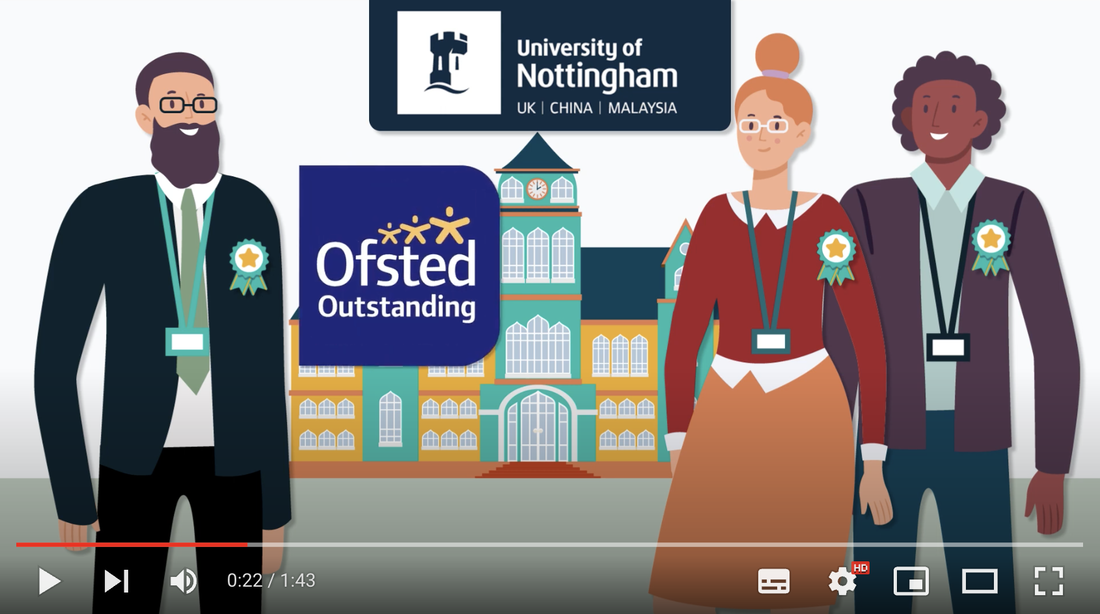
SWIFT Teacher Training builds on our successes and standing as the sector-leading partnership of South West Institute for Teaching (SWIFT), supporting 500+ schools and 3000+ teachers and leaders with high quality professional development throughout a teacher’s career spanning induction to leadership. As you will see in the animation, our PGCE Teacher Training courses are designed by professional experts and teachers, with the PGCE element delivered by the University of Nottingham. We want you to train with confidence and we understand the importance of flexibility for you and your situation. You can train close to home thanks to our network of campuses and schools across the beautiful South West peninsula plus flexible online learning opportunities. We want teaching to be a career where you know that you belong and you can thrive, feel valued and ultimately, fulfil your unique potential to make a difference, transform children’s lives and create a fairer society. Make training with SWIFT Teacher Training the convenient pathway into teaching for you. Contact Email | [email protected] |
Archives
December 2025
CategoriesAll Diversity Equity Experiences Former Trainee Inclusion And Belonging Interviews Languages Music News PGCE Schools Teachers Teacher Training Trainees University of Nottingham Video Access Octomono Masonry Settings
|
Teacher Training in the South West with SWIFT |